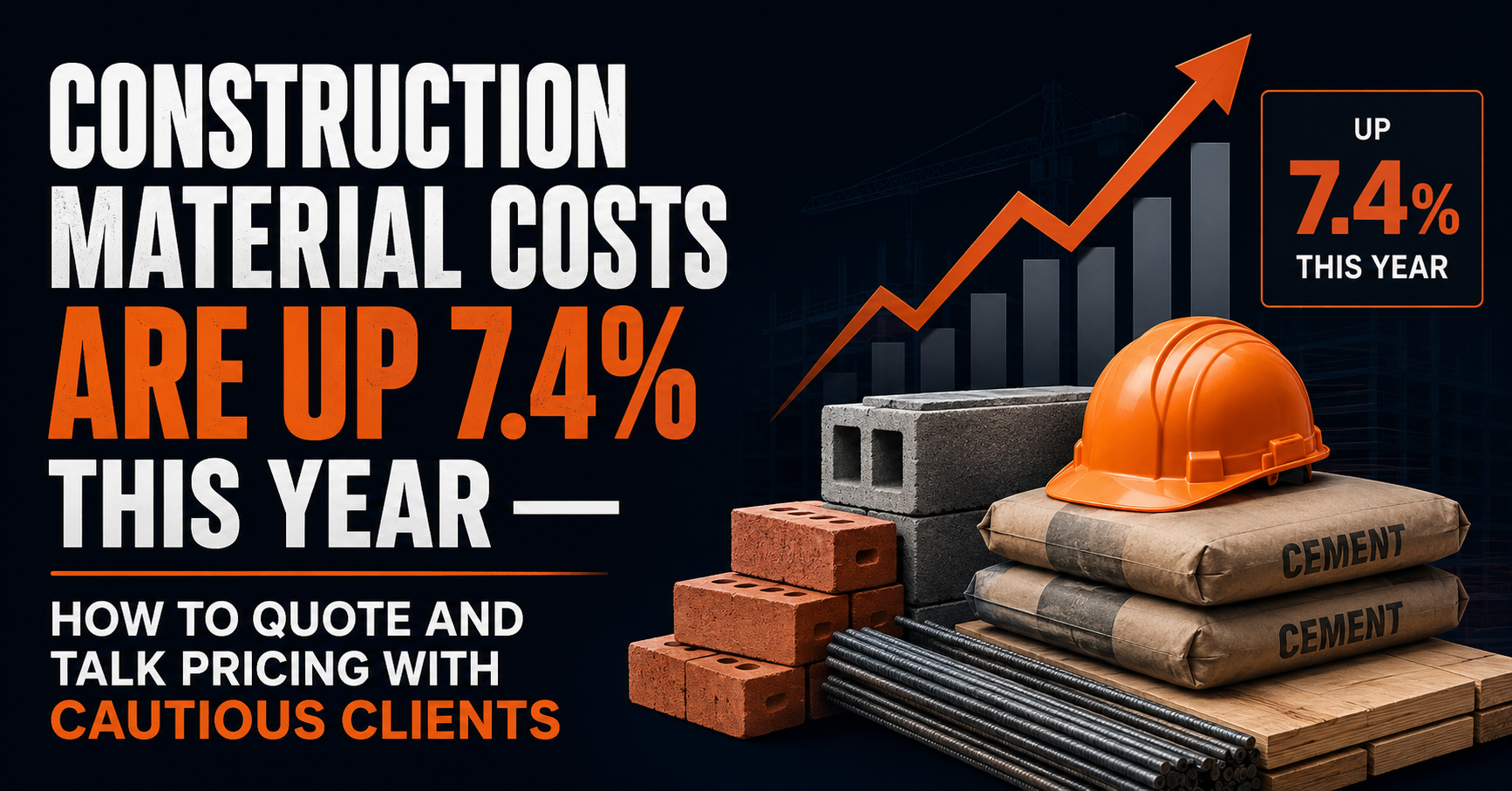
Construction input prices are now running roughly 7.4% higher than they were a year ago, according to the latest industry pricing data. For a builder or renovation contractor, that number is not an abstract economic statistic — it is the gap between a quote given in good faith three months ago and what the same materials actually cost to deliver today. And it is landing at the worst possible moment: right as buyer confidence is softening and clients are more price-sensitive than they have been in years.
Why This Squeeze Is Different From Past Cost Increases
Material cost increases are nothing new to construction — every builder has lived through a version of this before. What makes the current environment harder is the combination. Costs are rising at the same time that client caution is rising, which means the usual response of simply passing the increase through and moving on works far less reliably than it used to. A client who might have absorbed a 3 to 4% variance without much conversation is now asking harder questions, comparing quotes more carefully, and in some cases walking away entirely rather than accepting an increase mid-project.
The Real Cost Isn't the Materials — It's the Conversation
Most builders lose more trust from how a price increase is communicated than from the increase itself. A client who finds out about a cost jump halfway through a project, delivered defensively or apologetically, remembers that moment far longer than the actual dollar figure. A client who was told upfront that pricing includes a materials variance clause, and is updated proactively the moment costs shift, generally accepts it without the relationship taking any damage at all. The difference is not the number. It is whether the client felt informed or ambushed.
Three Ways to Handle This With Clients Right Now
Build a materials variance clause into every quote, stated plainly in writing, so a cost shift becomes something the client already expected rather than a surprise renegotiation. Quote with a validity window — typically 30 days — rather than leaving pricing open-ended, which protects margin and gives the client a clear, honest reason to decide sooner rather than later. And when a cost increase does need to be passed on, communicate it early and directly, with the reasoning shown plainly rather than buried in an invoice line the client discovers on their own.
Why This Also Changes How You Should Be Marketing Right Now
In a market where pricing conversations are getting harder, the builders who win are not necessarily the cheapest — they are the ones who feel the most trustworthy before a single quote is even discussed. That trust gets built long before the first phone call, through a website that is transparent, reviews that are visible, and a process that feels organised rather than reactive. This is exactly the dynamic covered in our guide to how custom home builders get more qualified leads, where the businesses attracting serious, well-qualified clients are consistently the ones presenting themselves as organised and transparent from the very first interaction.
It also makes lead qualification more important, not less. A cost-conscious market naturally produces more price-shoppers and fewer serious, ready-to-commit clients. Filtering for genuine budget and timeline before investing hours into a detailed quote — the same discipline covered in our breakdown of cost per acquired project — protects your time for the clients who are actually going to build.