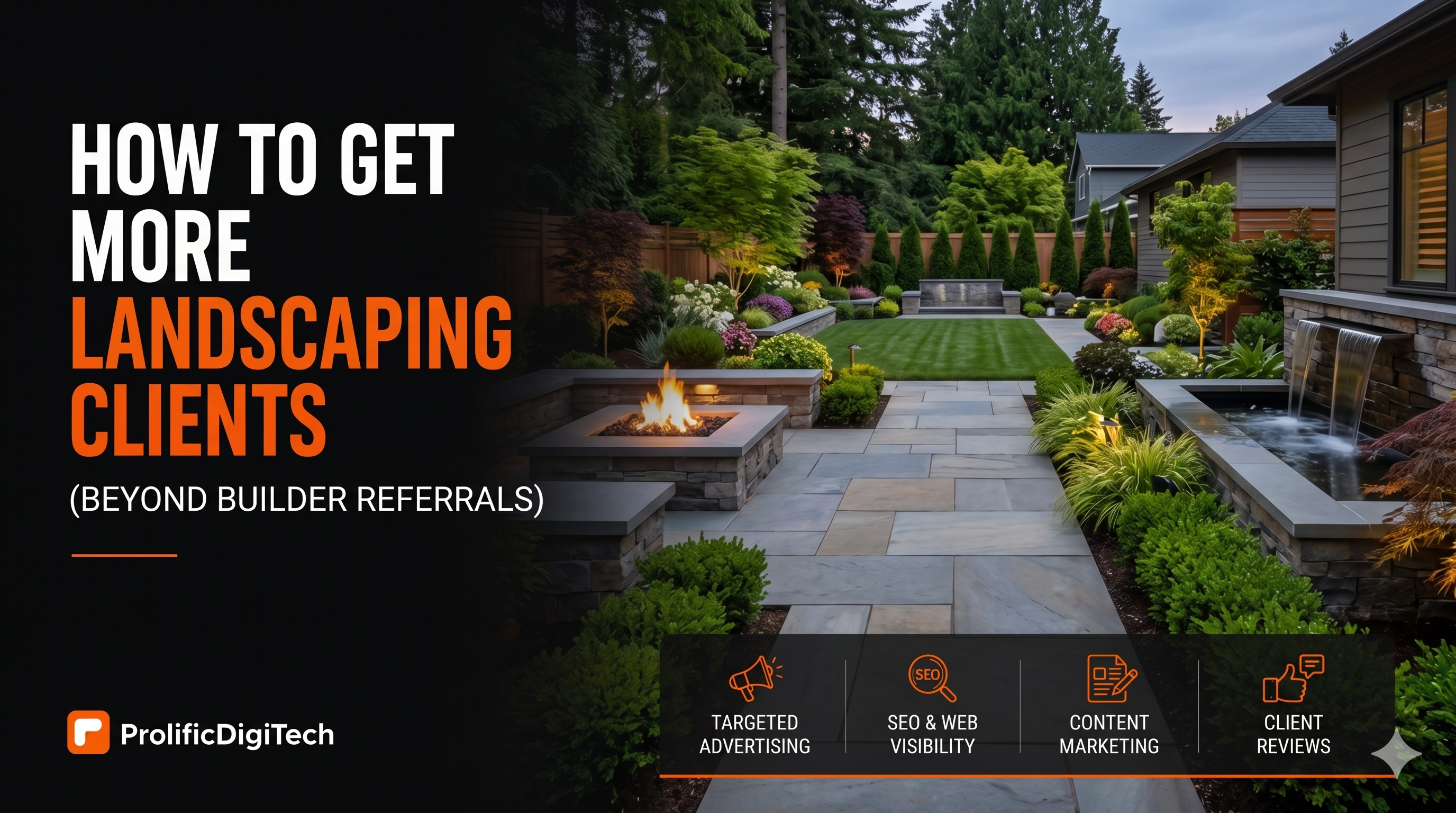
Most landscaping businesses we talk to have one thing in common: the majority of their best projects came through a builder who passed on their name. That channel works well until it doesn't — and when a key referral relationship goes quiet, or a builder starts recommending someone else, there is often no second channel ready to fill the gap.
Why Landscaping Sits at the End of the Decision Queue
There is a structural reason landscaping businesses are disproportionately dependent on referrals: homeowners tend to think about the garden last. The house gets designed, financed, built or renovated — and then, often a year or two later, attention turns to the outdoor space. This sequencing means that by the time a homeowner is ready to talk to a landscaper, they are usually asking whoever did the house work who they recommend. That is great for the landscapers who get those recommendations. It creates a precarious situation for everyone else.
The Homeowners Who Search Directly — and How to Reach Them
Not every homeowner asks a builder for a landscaping recommendation. A significant segment searches directly — particularly for higher-value outdoor projects like pools, full garden redesigns, decking and outdoor living areas, and retaining walls. These homeowners often start with a Google search for a landscaper or landscape designer in their area, and the businesses that appear at the top of those results have a genuine advantage that has nothing to do with referral relationships.
Google Ads targeting search terms like "landscape designer [your city]," "outdoor living contractor," or "pool and landscaping company" capture this audience at the exact moment they are ready to book quotes. For design-and-build landscapers with a minimum job size, these are often the most qualified enquiries available — because the homeowner has already decided they want a professional, has some sense of what they want done, and is actively comparing businesses right now.
A homeowner typing 'landscape designer Sydney' is not browsing — they are ready to talk to someone. The question is whether that someone is you.
What a Direct Lead Channel Looks Like for Landscapers
An effective direct pipeline for a design-and-build landscaping business combines three things:
- Google Ads targeting homeowners actively searching for landscaping, outdoor living, or hardscaping services in your area — this captures high-intent demand that exists right now, independently of any referral chain.
- Meta Ads showcasing completed outdoor transformations — before and after photography, project walkthroughs, finished spaces that communicate scale and quality — reaching homeowners earlier in their planning process before they have started actively searching.
- Phone qualification within five minutes of every enquiry, confirming project type, property size, timeline, and budget — so the appointments that land on your calendar are worth quoting, not tyre-kickers comparing prices.
What Should You Budget?
For design-and-build landscapers in Australia, a realistic starting point is AUD $1,500–2,500 per month in ad spend, separate from any management fee. The key filter is minimum job size — campaigns and landing pages should be written to reflect the scale of projects you actually want, so the enquiries that come through are in the right range from the start. In the US, a comparable starting budget in USD applies given similar market dynamics.
Getting Started
If your pipeline is currently dependent on two or three key referral relationships and you want a controllable second channel, see how we build direct lead pipelines for landscaping businesses — a free audit will show you exactly what direct demand looks like in your area right now.