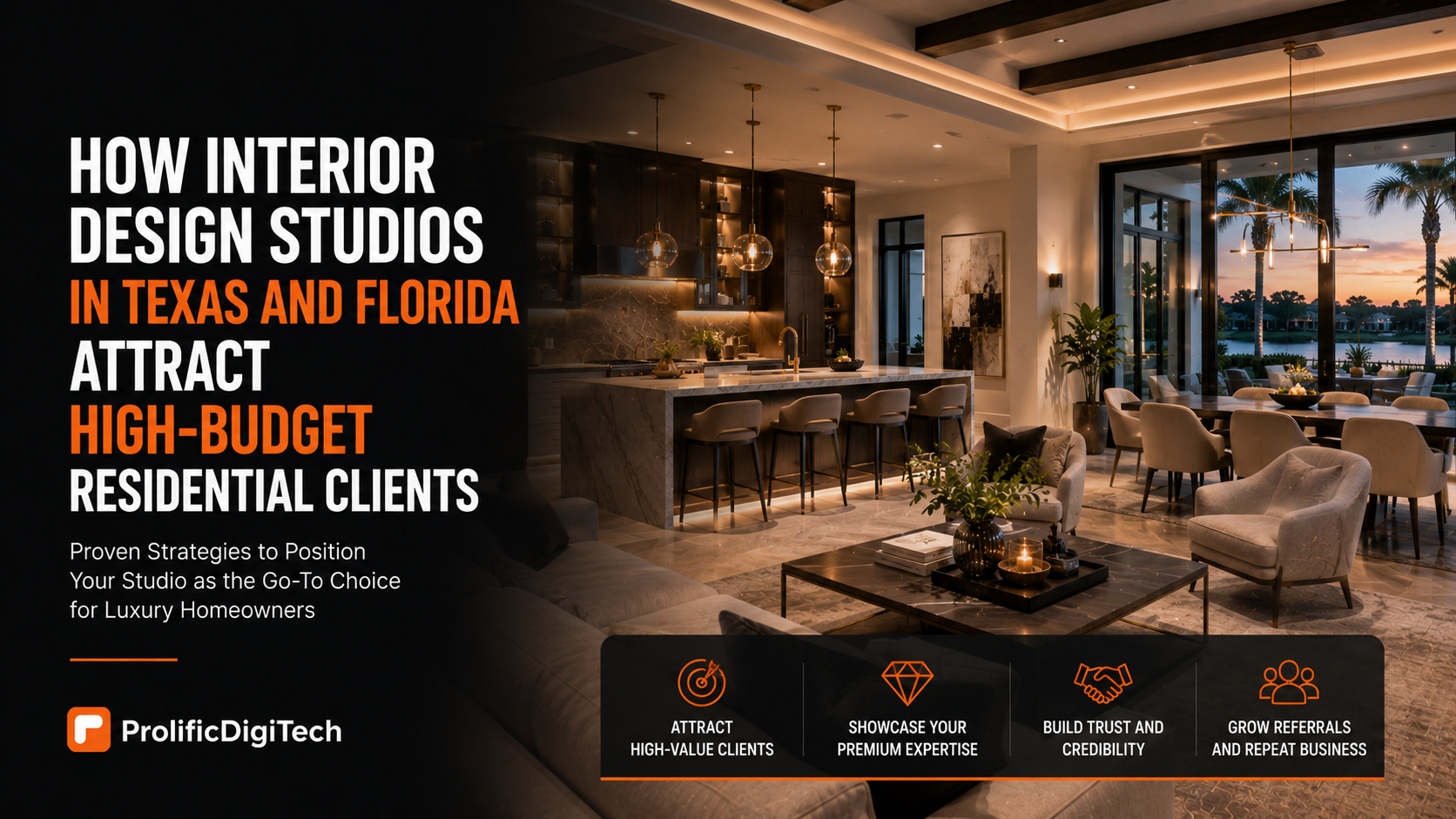
Interior design studios in Texas and Florida operate in two of the most active residential markets in the United States. The Dallas-Fort Worth metroplex, Houston, Austin, Miami, Tampa, and Naples all have substantial populations of homeowners spending serious money on high-end renovations, new custom home interiors, and whole-home redesigns. The demand is real. The challenge most studio owners face is not a shortage of potential clients — it is a shortage of the right potential clients finding them at the right time.
Why Referrals Cap Studio Growth
Word of mouth is how almost every interior design studio in the US builds its first book of clients. It works because referred clients arrive with trust already established, which shortens the sales process and typically results in smoother project delivery. The structural problem is that your referral pool is defined entirely by your existing clients. If your current client base is primarily homeowners doing $40,000–70,000 renovation projects and you want to move toward $150,000+ whole-home interior packages, referrals from those clients will keep delivering $40,000–70,000 enquiries. Referrals replicate your current positioning — they rarely elevate it.
The other limitation is timing. Referrals arrive when someone in your network happens to be renovating, not when your studio has capacity. Studios that rely entirely on referrals often oscillate between being stretched and being quiet, with no reliable way to manage the pipeline. In markets like Austin and South Florida where high-end residential activity is high but competition among designers is also growing, a passive acquisition strategy is increasingly a disadvantage.
What the Right Clients in Texas and Florida Actually Look Like
The ideal client for a mid-to-high-end interior design studio in the US is a homeowner spending $600,000 or more on a custom home build or major renovation, who understands that interior design is a professional service with a separate fee structure from the contractor or builder. They are not looking for the cheapest option. They are looking for someone whose work they have seen and whose judgment they trust. In Texas and Florida, this profile tends to cluster around homeowners in new construction phases — particularly custom home builds in the $1M–4M range where the builder is separate from the interior designer — and in established high-income suburbs undertaking significant renovation work.
A Client Acquisition System Built for US Interior Design Studios
An effective paid acquisition system for an interior design studio in the US uses Meta Ads and Google Ads together, with phone pre-qualification filtering enquiries before they reach the studio's calendar:
- Meta Ads targeting homeowners in high-income zip codes within your target markets — Dallas, Houston, Austin, Miami, Naples, Tampa — using completed project photography and before-and-after visual content. Interior design is a visual decision. Homeowners form design aspirations on Instagram and Facebook long before they search for a designer by name. Putting your work in front of the right audience at that aspirational stage is where Meta performs best.
- Google Ads targeting active search queries — interior designer Dallas, luxury interior design Houston, interior design studio Austin, home interior designer Miami — capturing homeowners who are already at the decision-making stage. Lower volume than Meta but higher purchase intent at the point of contact.
- Phone pre-qualification within five minutes of every enquiry. The questions that matter: What is the project — new build, full renovation, or specific rooms? What is the design budget separate from construction? What is the timeline? Have they worked with an interior designer before? This step removes the wrong enquiries before they consume the studio's consultation time.
What Does This Cost in the US Market?
For interior design studios in Texas and Florida, a realistic starting monthly ad spend is USD $1,500–3,000, depending on the number of markets targeted and the minimum project size the studio is focused on. Studios targeting $100,000+ projects should expect fewer enquiries and a higher cost per qualified lead than studios with a broader project range — but the revenue per project more than compensates. The economics of one closed consultation from a qualified $200,000 project enquiry against a month of ad spend make the case clearly.
Getting Started
If your studio's enquiries are inconsistent or frequently not the right budget or project type, the gap is almost always upstream of the consultation — in how the studio is being found and what is being confirmed before the calendar invite is sent. See how this works for interior design studios in the US — you can book a free audit from there.