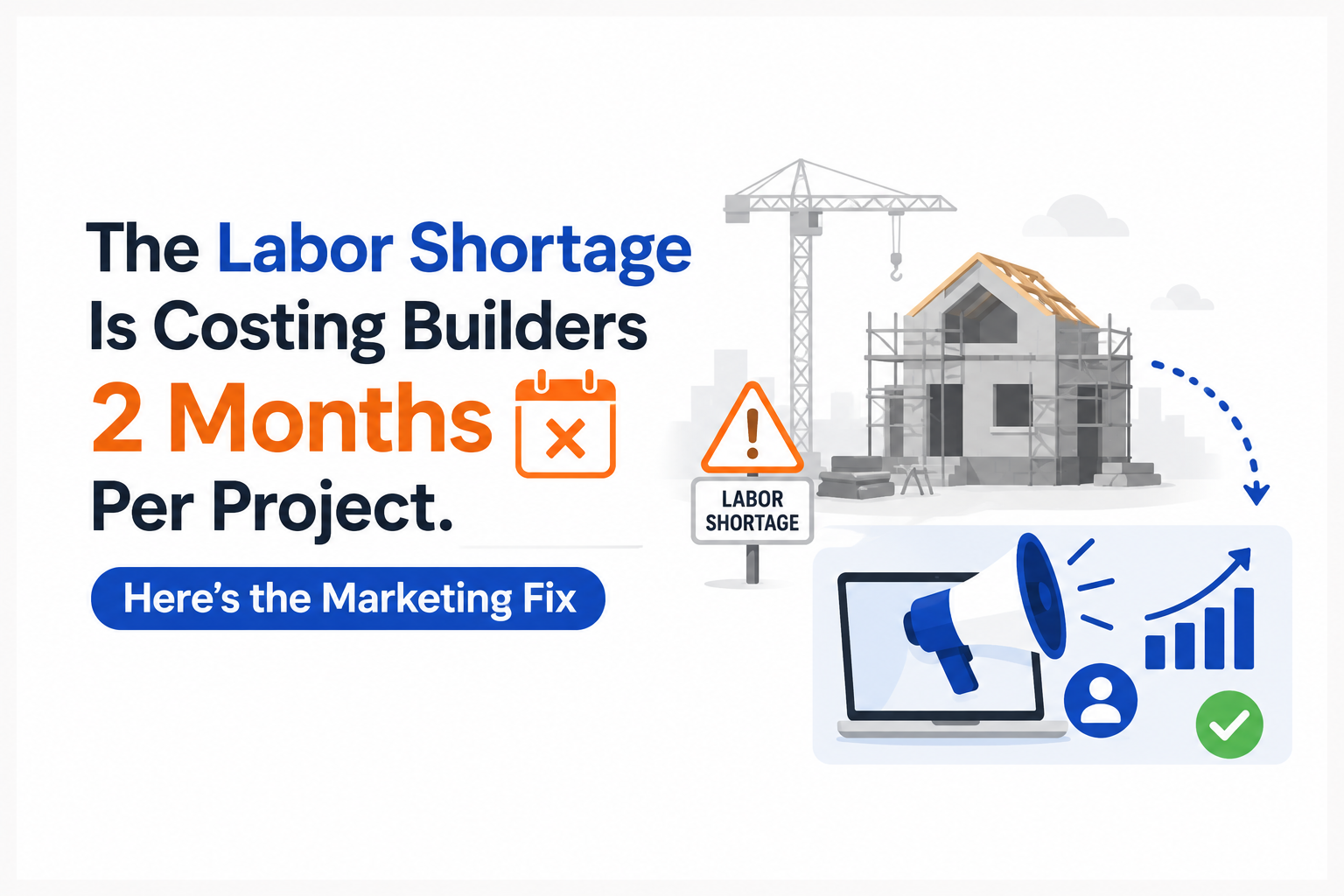
The labor shortage is costing the construction industry more than $10 billion a year in lost productivity, and it's adding close to two months to the average project timeline. Nearly 41% of the workforce is expected to retire within the next several years, and the trades aren't replacing them fast enough. If you build for a living, none of this is news. You feel it every time you try to get a framer or a chippy on site.
Most of the conversation about this focuses on hiring. How to find workers, how to keep them, how to train apprentices. That's all real and worth doing. But there's a marketing side to the labor shortage that almost nobody talks about, and it quietly costs builders more than the shortage itself.
When you can't take on more work, bad leads cost double
Here's the thing people miss. When you're short on crew, your capacity to build is capped. You can only run so many jobs at once. That means every hour your team spends is precious, and every hour spent on the wrong thing is an hour you can't get back. In a busy market with plenty of labor, chasing a tyre-kicker who was never going to sign is annoying. In a market where your crew is your bottleneck, that same wasted hour is a job you couldn't take.
I spent twenty years in construction, and the maths on this is brutal when you actually look at it. Say you can realistically run five jobs at a time with the crew you've got. If two of those five slots get eaten by clients who mess you around, change scope, or drag out decisions, you haven't lost two clients. You've lost 40% of your entire capacity for the year. The labor shortage set the ceiling. Bad clients are what stop you reaching it.
The answer isn't more leads. It's better ones.
This is where a lot of builders get the strategy backwards. When work feels tight, the instinct is to get more enquiries in the door. More ads, more leads, more names to call. But if your crew can only handle five jobs, a flood of extra enquiries doesn't help you build more. It just gives you more people to say no to, and more hours burned sorting the serious ones from the time-wasters.
When your capacity is capped by labor, the goal changes. You don't want more leads. You want the right five. You want your limited crew pointed at the clients who have the budget, have decided to build, and will make decisions without dragging every choice out for three weeks. Filling your calendar with qualified, ready buyers matters far more than filling it with a big pile of maybes.
Qualify hard, before the job starts
The fix is qualification, and it has to happen before anyone gets near your calendar. Every enquiry should get a real conversation early on that checks the basics. Do they have the budget for the scope they're describing. Is their finance sorted. Have they actually decided to build, or are they still years away and just gathering ideas. A five-minute phone call that answers those questions saves you a site visit, a quote, and hours of back-and-forth with someone who was never going to sign.
This feels uncomfortable to builders who grew up in busier times, when you took every job you could get. But the market has changed. With crew as your bottleneck, saying no fast to the wrong job is how you protect your ability to say yes to the right one. Being selective isn't arrogance. It's survival.
Protect your crew's time like the scarce thing it is
The labor shortage isn't going away soon. The workers retiring outnumber the ones coming in, and that gap takes years to close. So the builders who do well through it won't be the ones who somehow magic up more crew. They'll be the ones who treat the crew they have as their most valuable asset and refuse to waste a single hour of it on work that was never going to happen.
That starts with the leads you let through the door. If you want a pipeline that brings you qualified, ready-to-build clients instead of a pile of maybes your crew can't afford to chase, here's how we build that for custom home builders. Every lead gets called and budget-checked before it reaches your calendar, and you can book a free 20-minute audit from there.